
Not long ago, the United Arab Emirates were considered an almost ideal home for crypto businesses. Favorable regulation, tax advantages, and government-level support made Dubai one of the key centers of Web3.
But the situation is changing. Geopolitical tensions in the Middle East, including attacks in the Persian Gulf region, have begun to impact the economy — and the crypto industry has not been left aside.
Some companies have already left the region, major events are being postponed or canceled, and market participants are increasingly thinking about backup options.
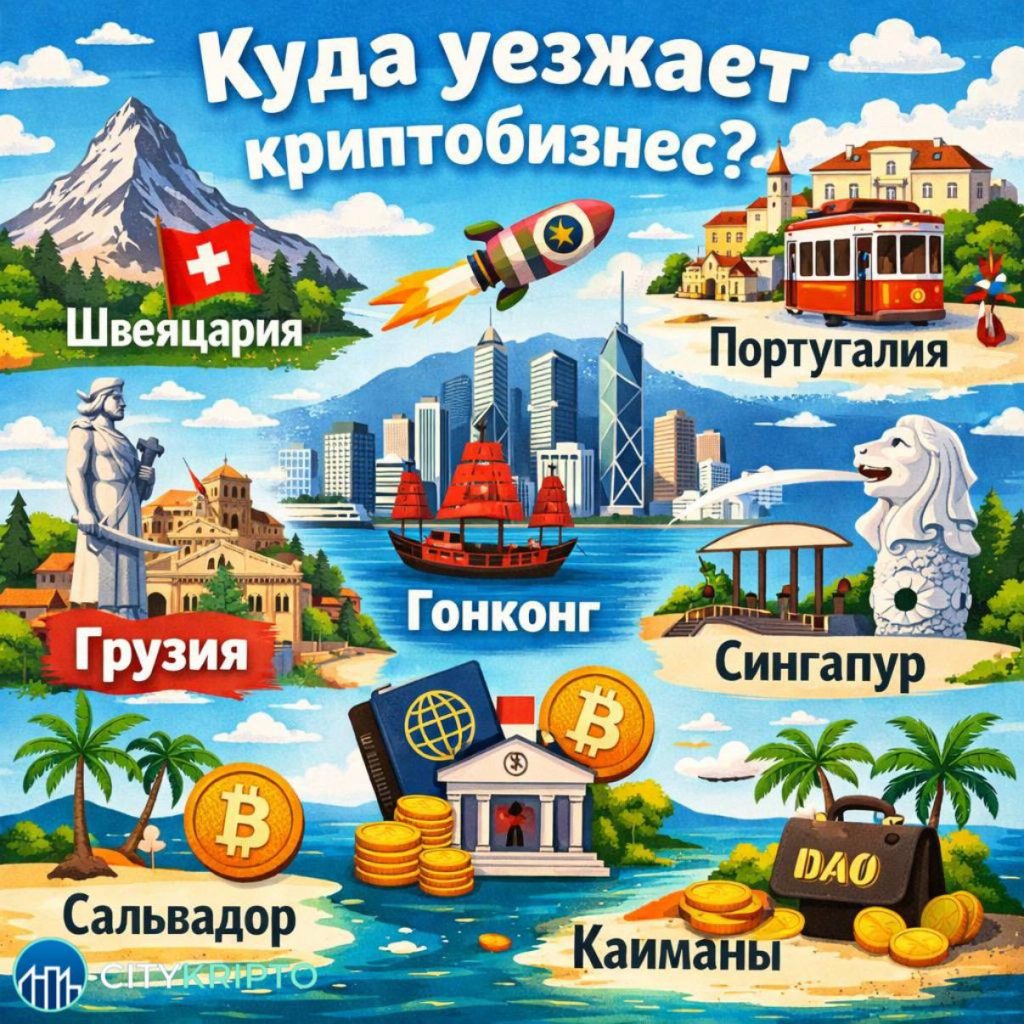
Let’s take a closer look at what is happening in Dubai — and which countries could become a new base for crypto companies.
Dubai: less noise — more substance
Interestingly, within the crypto community itself, the changes are not perceived only negatively.
The market in Dubai is gradually “cleansing”: those who failed to establish themselves are leaving, while teams with long-term plans remain. The atmosphere is becoming more focused and calm — without the previous hype.
Investors have taken a wait-and-see approach, liquidity is accumulating, and projects continue to develop — but without overheated hype.
Nevertheless, risks are growing: temporary airport closures, rescheduling of major conferences, and an unstable environment are pushing businesses to think about diversification.
1. Switzerland — a bet on stability
If reliability and clear rules of the game are the priority, Switzerland remains one of the best options.
Zug, known as “Crypto Valley,” attracts projects thanks to its clear regulation and flexible approach from regulators. Major blockchain ecosystems are based here, and the legal structure of foundations is ideal for Web3 projects.
Pros:
– strong legal protection
– stable political environment
– developed crypto ecosystem
Con — a wealth tax: you’ll have to pay even on unrealized assets.
2. Portugal — a soft entry into Europe
Portugal has long remained a magnet for crypto enthusiasts.
The main advantage is the absence of tax on long-term crypto holdings (under certain conditions), as well as access to the entire EU market through unified regulation.
Suitable for those who want to operate in Europe but are not ready for stricter conditions in other countries.
3. Georgia — an underrated player
Georgia is one of the easiest entry points into crypto business.
Here:
– no strict restrictions
– simplified licensing
– no tax on crypto income for residents
An additional bonus is free industrial zones with favorable conditions for mining and exchanges.
However, there is a nuance: to benefit from tax advantages, you need to become a tax resident of the country.
4. Hong Kong — access to Chinese capital
Hong Kong is a unique gateway to the Asian market, especially if access to mainland Chinese capital is important.
The jurisdiction offers:
– licensed crypto platforms
– no capital gains tax for private investors
However, the entry threshold is high: licensing takes months and requires a significant local presence.
Singapore — an elite but closed club
Singapore remains a prestigious jurisdiction, but the rules of the game have tightened.
Now:
– obtaining a license is extremely difficult
– operating “globally” without a local presence is not allowed
This is not an option for startups, but for mature businesses with resources and strategy.
6. El Salvador — cheap and radical
El Salvador offers perhaps the most accessible market entry:
– 0% taxes
– low-cost licenses
– pro-crypto government policy
However, infrastructure still lags behind more developed countries, which is worth considering.
Cayman Islands — not for living, but for structuring
The Caymans are more of a legal tool than a place to relocate.
Ideal for:
– funds
– DAOs
– international structures
Taxes are zero, but entry is expensive, and living there is far from cheap.
Conclusion
The UAE remains an important player in the crypto industry, but no longer the only obvious choice.
The market is becoming more mature: companies are not just following trends, but choosing jurisdictions based on specific goals — whether it is access to capital, tax optimization, or regulatory transparency.
And the main trend now is not relocation “to one place,” but risk distribution across multiple jurisdictions.