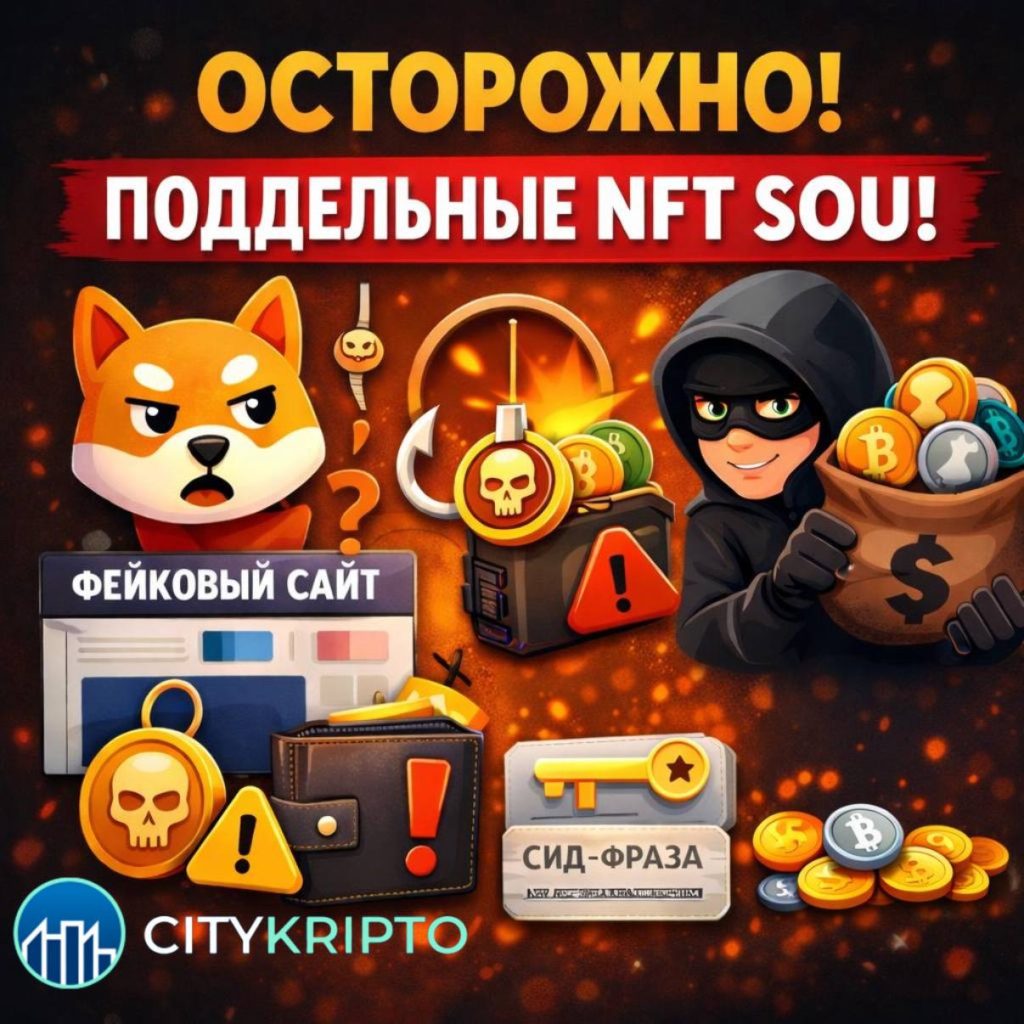
Scammers have taken advantage of the recent compensation initiative launched by Shiba Inu and begun distributing phishing links disguised as official token giveaways.
What Happened
Following the attack on the Shibarium bridge in September last year, a hacker managed to drain digital assets worth more than $4 million. Many users were affected by the breach. In response, the Shiba Inu development team introduced collectible SOU tokens as part of a compensation mechanism for impacted community members.
These SOU tokens are NFTs designed to serve as a form of digital receipt confirming a user’s eligibility for compensation. According to the developers, recipients may also trade these NFTs on supported marketplaces.
How the Scam Works
Shortly after the announcement, cybercriminals launched fraudulent websites closely resembling the official Shiba Inu portal. These fake platforms promise users a “free SOU NFT airdrop” and encourage them to connect their crypto wallets.
The real goal is to trick victims into compromising their wallets. Common tactics inсlude:
– Prompting users to connect their wallet and sign a malicious transaction
– Requesting seed phrases (recovery phrases)
– Asking for private keys or other sensitive credentials
– Gaining wallet access after users unknowingly approve harmful permissions
Once scammers obtain this information, they can drain funds almost instantly. In many cases, victims lose not only the promised “compensation” but all assets stored in their wallets.
Official Clarification
Representatives from the project’s security initiative, Susbarium, emphasized that SOU NFTs are never sent directly to users without an official claim process. Eligible participants must claim their tokens exclusively through the official website, Shib.io, where the compensation amount should be clearly displayed.
The team also stressed that they will never request private keys, seed phrases, or passwords under any circumstances.
Previous Fraud Attempts
This is not the first time scammers have exploited the Shiba Inu ecosystem. In the past, fraudsters promoted fake TREAT tokens on networks such as Solana and Base, while the official token launch occurred solely on Ethereum. Such schemes demonstrate how quickly criminals capitalize on trending crypto developments.
How to Protect Yourself
To avoid becoming a victim of phishing attacks:
– Manually type the official website address into your browser
– Carefully check the domain name for misspellings or subtle changes
– Never share your seed phrase or private keys
– Do not sign transactions you do not fully understand
– Use hardware wallets and enable two-factor authentication whenever possible
Always stay cautious and double-check any links before clicking. Even if an offer appears urgent or official, taking a few extra moments to verify the source can save you from significant financial losses. Protect your funds and treat any “free airdrop” with skepticism — in crypto, haste and inattention are often what scammers rely on most.